AI animation, traditional animation, or hybrid: when to choose each approach
Written by Myth Studio
Studio Post
There is a new question on the block. "Can we use AI?" is now the starting pistol on a lot of animation briefs from brands and agencies. The answer varies by project. A hybrid approach, one that uses AI at specific stages rather than end to end, is frequently the right answer. Here is how to choose between AI, traditional, and hybrid production.
Quick answer
- Choose AI when speed is the binding constraint, volume is high, the brief is photoreal, the asset has short shelf life, or you are exploring concepts ahead of a full commission.
- Choose traditional when character performance is central, brand consistency is non-negotiable, the asset must live for years, clearance is strict, or the animation itself is the brand.
- Choose hybrid when the brief sits across both, which on commercial work is most of the time. The common patterns are AI environments with traditional characters, AI in development with traditional finishing, and traditional motion design built over AI source imagery.
What each approach actually means
Traditional animation covers frame-by-frame illustration, rigged 2D character animation, 3D production, motion design, and stop motion. The defining property is direct artistic control over every frame, with provenance you can audit and craft you can iterate to specification.
AI animation covers production approaches built around generative video and image models[1][2][3], often combined with rotoscoping, in-painting, and custom-trained models. The defining property is generative output guided by prompt, reference, and post-production craft, with economics that scale very differently from frame-by-frame work.
Hybrid production uses both. Common patterns include AI-generated environments composited with traditionally animated characters, AI-generated reference imagery driving traditional 2D illustration, traditional motion design built over AI-generated plates, and AI-assisted in-betweening on a traditionally key-framed sequence. Most large campaigns now use hybrid workflows whether the brief acknowledges it or not[4].
When to choose AI
Choose AI when one or more of the following applies.
- Speed is the binding constraint. Research animatics that need to test in days rather than weeks. Time-sensitive social responses. Concept exploration ahead of a full production commission.
- Volume is high. Localisation across many markets. Format adaptation across many placements. Variant testing for performance campaigns. The economics of AI bend sharply once you cross a few dozen outputs.
- The brief is photoreal. Generative video models now reach photoreal output at a fraction of the cost of equivalent VFX work, particularly for environments, atmospheres, and naturalistic action[1][3].
- The asset has a short shelf life. Performance creative that runs for a quarter. Social content that lives for a campaign cycle. The cost of frame-perfect craft does not pay back over a short lifespan.
- Concept exploration matters more than final craft. Animatics, mood films, internal pitch reels, and stimulus material for research. The point is to validate direction, not to produce to broadcast standard.
For commercially commissioned AI production at broadcast quality, Myth Labs handles this work as a dedicated AI video studio. Research animatics for insights and strategy teams sit there too.
When to choose traditional
Choose traditional when one or more of the following applies.
- Character performance is central. Audiences read character performance very quickly and very critically. Generative models still produce subtle inconsistencies in facial nuance, hand articulation, and physical contact that read as wrong even when viewers cannot articulate why. Rigged or hand-drawn character animation remains the reliable choice for performance-led work.
- Brand consistency is non-negotiable. Established brand worlds with specific colour relationships, line qualities, motion signatures, and character designs require frame-level control to hold across assets.
- The asset must live for years. Brand films, explainers, and identity work that will be viewed thousands of times benefit from craft that holds up under scrutiny. Generative artefacts that read as acceptable on first viewing become more visible on the tenth.
- IP and clearance positions are strict. Traditional production gives you full provenance over every frame and every asset. For regulated categories, audience-facing claims, or work involving talent likenesses, this clarity matters[5].
- The work is the brand. Where the animation is itself the differentiator, frame-by-frame craft is what audiences are paying attention to. The senior 2D and stop-motion studios make this case continually.
When to choose hybrid
Choose hybrid when, honestly, most of the time. Three patterns deserve specific mention.
- AI for environments, traditional for characters. A reliable workflow for commercial work. Generative environments handle backgrounds, atmospheres, and set extensions at a cost that frees budget for character animation done properly.
- AI for development, traditional for finishing. Generative output drives the early stages of concept and animatic, then the production moves into traditional pipelines for hero finishing. This is the workflow that protects creative quality on broadcast campaigns.
- Traditional motion design over AI source imagery. Generative still imagery treated as plate material for motion design and compositing. A great deal of premium social content is now produced this way[4].
The mistake to avoid is treating hybrid as a cost-saving measure rather than a craft discipline. Combining AI and traditional well requires production teams who understand both pipelines and the handover points between them. Done poorly, hybrid work shows the seams.
How Myth Studio approaches hybrid production
The principle that guides Myth Studio's hybrid work is that the process is the point. Artists should still be working in a way that feels natural to artists, and AI should augment that process rather than replace it. The moment a tool starts substituting for the steps a team would usually take, the work loses what made it worth making.
In practice that means projects do not start with AI-generated images. Prompting images is not a natural way for an artist to work, and AI-image-to-video pipelines tend to strip out the layers of collaboration that are baked into any serious production. Sketching, painting, modelling, and iterating together as a team remain the foundation of every project.
Where AI enters the pipeline is at specific production stages, with a strong creative spine running through the work. The studio's project for Nestlé Compleat, Inchstones, is a representative example. The commercial was made with an entirely traditional process up to the point of animation. Hand-drawn storyboards. An impressionist colour script capturing mood and palette. Fully modelled 3D environments with every prop placed and every surface textured. Characters built in 3D. High-resolution renders of each scene were then animated using AI video models, run as a video-to-video pass over the rendered plates.
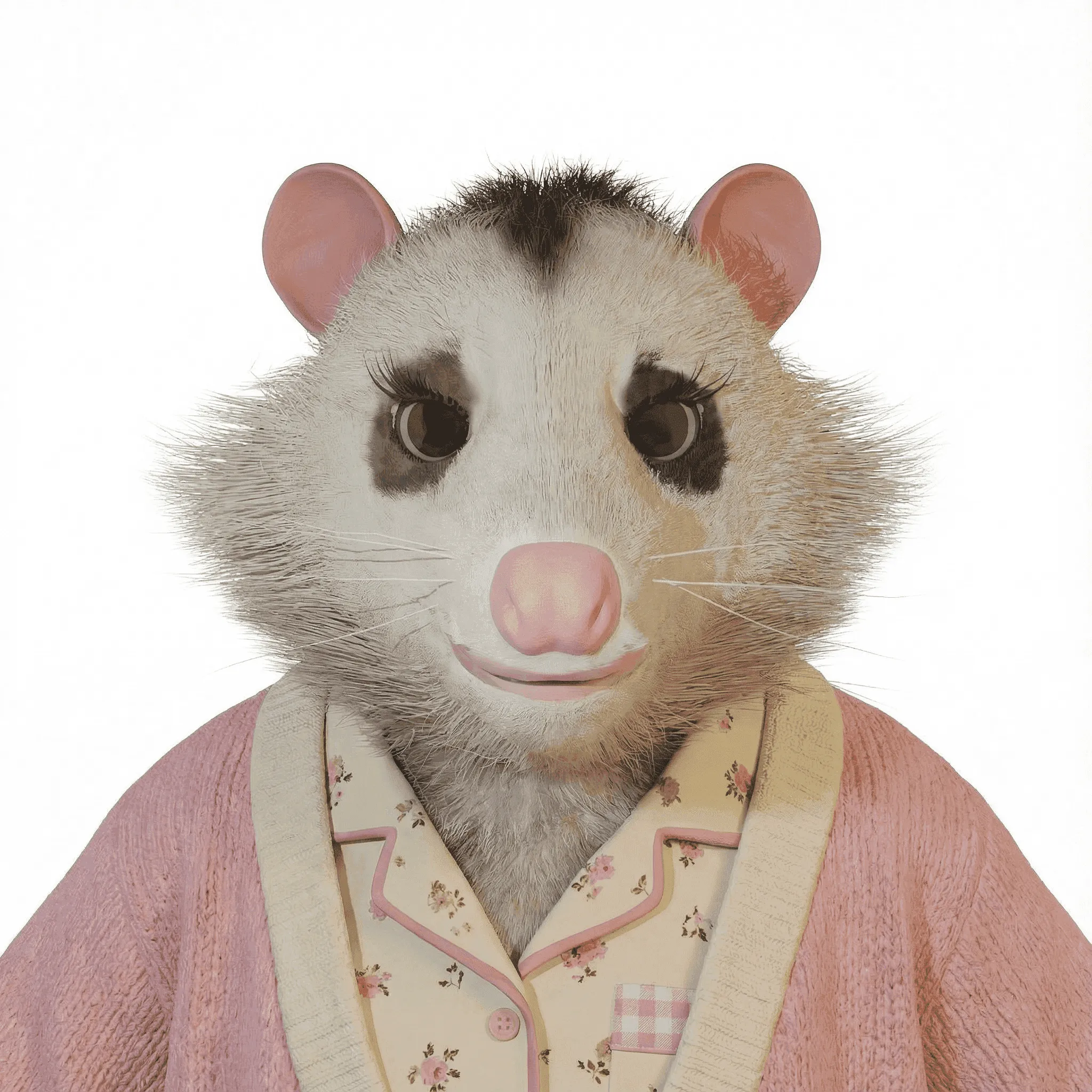
The benefit is twofold. Technically, AI handles the motion stage that would otherwise demand intricate rigging work, particularly for complex surfaces like fur. Creatively, the artist's role becomes closer to directing AI than generating with it. The performances that come back are unruly by nature, but with strong taste and a considered system for prompting, they can be guided into something that holds up on screen.
Alongside the production pipeline, AI is used in a few smaller, well-defined ways. Reference gathering at the start of a project, where image generators produce a quick visual base to sketch from. Brainstorming, where AI surfaces adjacent movements, periods, or thematic links the team had not considered. And artists building bespoke tools and interfaces through natural-language coding, shaping a workflow that fits the project.
The through line is the same throughout. The creative decisions, the taste, and the craft remain human. AI brings speed and the occasional lateral perspective. Considered hybrid work is what comes out of that division of labour.
A decision framework
Six questions resolve most production approach decisions.
What is the shelf life of the asset?
Short shelf life favours AI. Long shelf life favours traditional, or hybrid with traditional finishing.
How brand-defining is the work?
Hero brand assets favour traditional or hybrid. Performance and supporting assets favour AI or hybrid.
How many variants do you need?
One or two favours traditional. Dozens favours AI. Hundreds favours AI by a wide margin.
Is there character performance?
Performance-led work favours traditional. Environment, atmosphere, and abstract work admits AI more readily.
What does the audience expect to see?
Categories that value craft signatures, hand-drawn aesthetics, or specific animation languages favour traditional. Photoreal or generative aesthetics admit AI.
What is the clearance position?
Strict clearance favours traditional[5]. Permissive clearance admits AI.
Common mistakes
Three recurring mistakes are worth flagging.
- Choosing AI for cost reasons alone. AI is not uniformly cheaper. The economics favour AI sharply at volume and on photoreal briefs. On a single hero asset with strict brand requirements, the cost of iterating an AI output to specification can match or exceed the equivalent traditional production.
- Choosing traditional out of habit. Many briefs that would benefit from AI or hybrid still default to traditional pipelines because the commissioning team's reference set predates the current generation of tools. Animatics in particular are a workflow where the old assumptions no longer hold.
- Treating hybrid as a fallback. Hybrid is not the option you choose when you cannot decide. It is a deliberate production discipline that requires the same level of craft attention as either pure approach.
The Myth Group view
The choice depends on the brief, and the criteria above resolve most cases. The patterns of hybrid production cover most of the rest. Studios that work across both pipelines, with senior production oversight on the handover points, are now the rule rather than the exception.
Myth Studio commissions traditional and hybrid animation for brand and agency teams. Myth Labs handles AI-led production at broadcast quality, including research animatics for insights and strategy teams. Briefs that span both routinely move between the two. If you are weighing up the right approach for a specific brief, get in touch.
Sources
- OpenAI, Sora, generative video model overview.
- Runway, Introducing Gen-3 Alpha, research announcement on a production-grade generative video model.
- Google DeepMind, Veo, generative video model.
- McKinsey & Company, The state of AI, annual primary research on enterprise adoption of generative AI, including marketing and creative production use cases.
- World Intellectual Property Organization, AI and intellectual property policy overview.
Key Takeaways
- Choose AI when speed, volume, photoreal output, short shelf life, or concept exploration is the binding constraint.
- Choose traditional when character performance, brand consistency, long shelf life, strict clearance, or the animation itself being the brand is the binding constraint.
- Choose hybrid on most commercial work, with AI environments and traditional characters, AI in development and traditional in finishing, or motion design built over AI plates.
- Hybrid is a craft discipline, not a cost-saving fallback. Done poorly, the seams between AI and traditional show.
- At Myth Studio, AI enters the pipeline at specific stages with a strong creative spine running through the work. The Inchstones project for Nestle Compleat is the worked example.
Continue Reading

How Can Artists Use AI Without Losing the Craft (and How Not To)

Will Animation Be Replaced by AI?