How AI Can Speed Up Animation Timelines Without Losing the Craft: Hybrid AI-Animation
Written by James Finlay
Creative Technologist and Founder of Myth Studio
Brands and agencies are under pressure to produce more content, faster. AI has opened genuine new prospects for speed and budget, but it is becoming a victim of its own success. The ease of generating AI imagery has flooded feeds with what is now widely called AI slop, and the sloppification of the average feed has made it natural to conflate cheap generative imagery with AI video models, since the typical process makes an image and then makes it move.
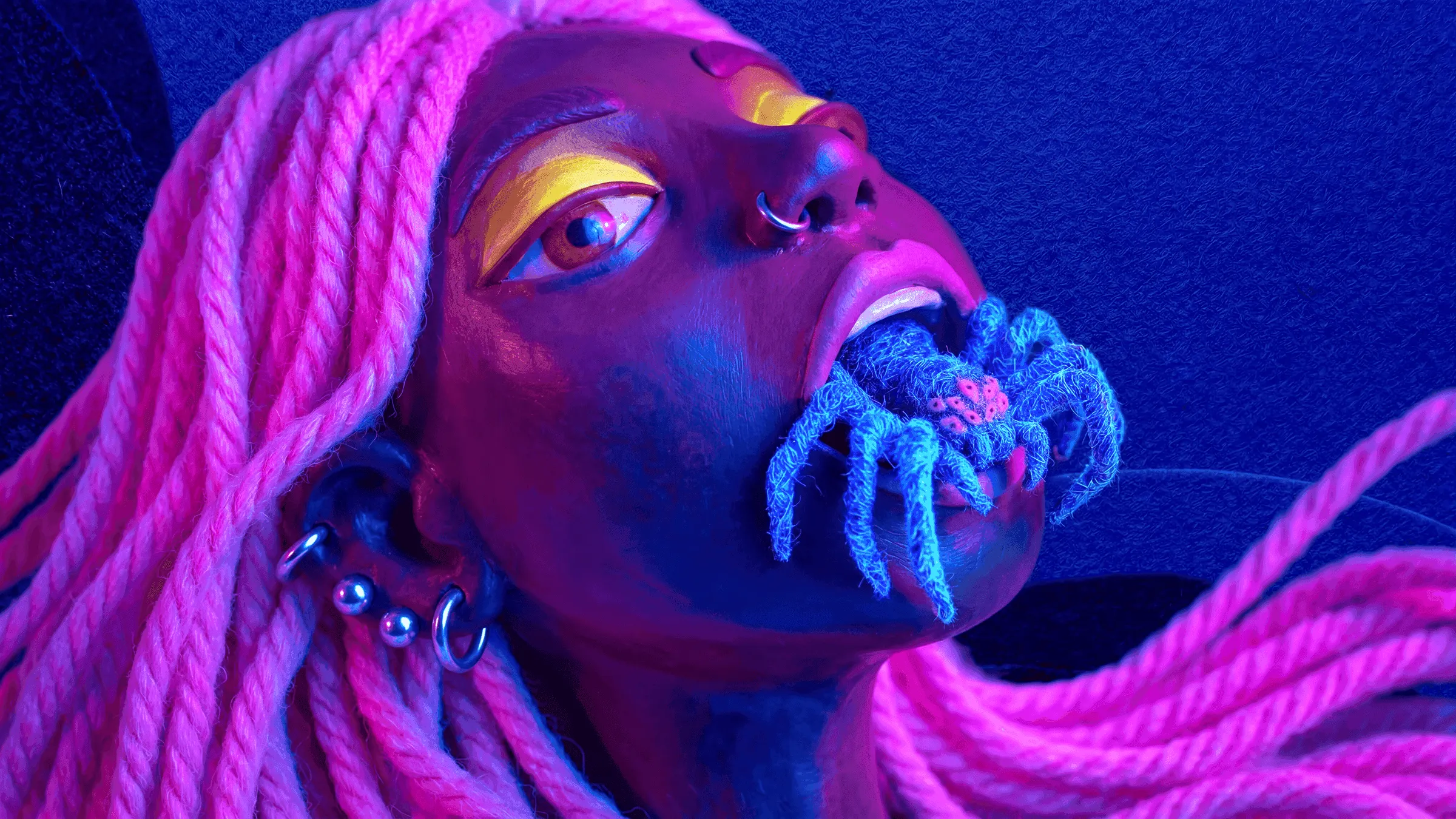
This conflation hides an oft-overlooked advantage. If any image can be animated with AI video models, why stop at AI imagery?
Enter hybrid AI animation. A workflow where traditional processes and AI models are used together to achieve outcomes neither could on their own. The video model does not care what input it gets. It animates what is in front of it. Hand-painted characters, sculpted maquettes, photographed elements, 3D-built scenes. All fair game. Which means the parts of a production that benefit most from human craft can stay human, while the parts that benefit most from compression can be compressed.
Where the Speed Actually Comes From
The animation pass is where most of the time goes in a traditional pipeline. Frame by frame, layer by layer, render queue after render queue. AI video models collapse this part of the process from weeks to days, sometimes hours. That is the bulk of the gain.
The second gain is in iteration. Testing a motion choice, a camera move, a piece of acting used to mean committing to a rough pass and reviewing it the next morning. With AI video models in the mix, several variants can be generated and compared in an afternoon. The director gets more options. The selection process gets sharper.
The third gain is in the elimination of the conventional render. AI video models output finished frames. There is no separate three-day render at the end of the project that everyone has been quietly dreading. The output is the render.
The total compression varies by project, but on the right brief the saving can be substantial. Three months of work in four weeks is not unusual.
How to Actually Achieve the Gains
Speed in hybrid pipelines does not come from generating recklessly. It comes from setting up the production so the AI has something specific and considered to animate.
The first principle is to build your inputs deliberately. The video model can only work with what it is given. A vague image yields vague animation. A characterful, well-designed character in a richly rendered scene yields motion that carries character with it. The craft on the front end is what makes the AI on the back end worth using.
The second principle is to match models to tasks. Different video models have different strengths. Some hold character continuity better. Some are more cinematic. Some are faster but lower fidelity. The compression evaporates if a team starts a project in the wrong tool and has to switch halfway. Choose deliberately.
The third principle is to develop a prompting and selection system rather than working shot by shot from scratch. Repeated patterns, locked terminology, an established library of what works for the project's look. A studio that runs hybrid pipelines well treats prompting as a craft of its own.
The fourth principle, and the one that ties the rest together, is to keep the artist's hand in the loop at every junction. The choice of which take to use. The choice of where to refine by hand. The choice of when the AI's pass is good enough and when it is almost right but not quite. None of those choices are made by the tools.
An Illustration
Our work on Inchstones for Nestlé, with KLICK Toronto, is a clear example of the approach. The piece had to feel handmade. Faux stop-motion, with all the texture and intent that implies. Artists built the puppet-like characters in Blender, and textured the tactile, miniature worlds they inhabit using Octane. Once the artwork was created, AI handled the motion.
The result was three times faster than a traditional production. The piece was delivered in four weeks. A traditional pipeline would have needed three months. The look is consistent, the craft is visible in every frame, and the speed came from the right place. Not from skipping the work that makes the piece feel handmade, but from compressing the part of the process that was always going to be the bottleneck.
The Point
The conversation around AI in production is dominated by slop because slop is what gets pumped into feeds. It is loud, fast, and easy to make. None of which has anything to do with what AI can be used for in the hands of a studio that knows what it is doing.
If any image can be animated, then any input is on the table. Hand-built work, hybrid pipelines, faster delivery, work that still looks like work.
That is the difference between slop and a four-week production that looks like it took three months.
For a closer look at how artists keep the craft intact when AI enters the pipeline, see How Can Artists Use AI Without Losing the Craft.
Key Takeaways
- Hybrid AI animation pairs traditional craft with AI video models, so the parts that benefit from human work stay human and the parts that benefit from compression get compressed.
- Most of the speed gain comes from collapsing the animation pass, faster iteration on motion choices, and removing the conventional final render.
- Speed depends on deliberate inputs, the right model for each task, a developed prompting system, and the artist's hand kept in every selection.
- On the right brief, three months of traditional work can be delivered in around four weeks without losing the handmade feel.
- Inchstones for Nestlé is a clear example: hand-built 3D characters and environments, animated with AI, delivered in four weeks instead of three months.