Animated Video Cost: 8 Factors That Affect Price
Written by James Finlay
Creative Director
You've got a brief, a budget, and a nagging feeling that animation might be the right move for your brand. But how much should it actually cost? And why does one studio quote £15k while another comes back with £150k?

The truth is, animation video cost factors vary wildly depending on what you're actually asking for. A 30-second social spot with flat illustrations is a different beast to a two-minute brand film with full character animation, original music, and a script that needs writing from scratch.
We've worked on everything from ITV's Euro 2024 title sequence to social films for activist organisations, and the pricing conversation always comes down to the same core variables. Here's what actually moves the dial.
1. Style Complexity
This is the big one. The visual style you choose has a direct impact on how many hours your project will take, and therefore what it'll cost.
Flat, vector-based styles are quicker to produce. Think bold shapes, clean lines, limited colour palettes. They're brilliant for explaining complex ideas quickly and they suit brands that want something modern and digestible.
Frame-by-frame animation, stop motion, or illustrative styles with texture and hand-drawn detail take longer. Much longer. Every frame needs individual attention. If you're after something that feels crafted, warm, or distinctly off-grid, expect the timeline and budget to reflect that care.
Lower cost styles
Flat vector, motion graphics, bold shapes, clean lines, limited palettes. Quick to produce and great for explainers.
Higher cost styles
Frame-by-frame, stop motion, hand-drawn illustration, textured or painterly work. Every frame needs individual attention.
Our Grow title sequence for Sky Studios used a Victorian silhouette style. Beautiful, atmospheric, time-intensive. Compare that to a motion graphics explainer and you're looking at entirely different production models.
If you're not sure which style suits your project, a good studio will help you figure it out. Sometimes the most expensive option isn't the right one.
2. Duration
Longer films cost more. Obviously. But it's not just about multiplying the per-second rate.
A 15-second social cutdown might only need one or two key moments. A 90-second brand film needs a narrative arc, pacing, scene transitions, and enough variety to hold attention. That means more assets, more animation, more sound design, more everything.
If you're working with a tight budget, consider whether you actually need two minutes or whether a lean 60 seconds might land harder. We've seen plenty of projects where trimming the runtime improved both the film and the finances.
Shorter is always better. For informational content, try to keep it to under 2 minutes.
3. Character Design and Animation
Characters are expensive, because they literally have more moving parts. What's more, getting a believable character animation is a highly specialist skill and takes time.
First, there's design. Every character needs to be drawn, refined, approved. Then they need to be rigged or prepped for animation, which means building them in a way that allows for movement. Then comes the animation itself, which for anything beyond basic motion requires real skill and serious hours.
If your character needs to walk, talk, emote, or interact with objects, you're looking at frame-by-frame animation. If they need to do all of that across multiple scenes, multiply accordingly.
Compare that to a film where the "characters" are abstract shapes or icons. It's just not the same level of labour.
Want characters but can't stretch the budget? Limit their on-screen time. Use voiceover to do some of the narrative heavy lifting. Be smart about what you're asking them to do.
4. Script Development
Not every project arrives with a script. Sometimes clients know exactly what they want to say. Other times, they know the feeling they want but need help shaping the story.
If you need a studio to write or co-develop your script, that's additional scope. It might involve workshops, multiple drafts, stakeholder alignment, tone-of-voice work. It's creative labour, and it takes time.
A strong script makes everything downstream easier. It tightens the edit, sharpens the visuals, makes the animation more purposeful. Skimping here to save money usually just means you're spending longer (and more) in revisions later.
If you've already got a script, make sure it's been written with animation in mind. Some concepts that work beautifully on the page become logistical nightmares in production.
5. Sound Design and Music
Sound is half the film. People underestimate this constantly.
Music
Ranges from royalty-free library tracks to a fully commissioned original score. Sets pace, emotion, and tone.
Voiceover
Professional talent, studio time, direction, multiple takes. Translation into other languages adds further cost.
We work with Rhydian Evetts on a lot of our projects, and the music always elevates the final piece in ways that aren't immediately obvious until you see a version without it. Music sets pace, emotion, and tone. It's not decoration.
If budget's tight, discuss upfront where you can flex. Maybe the music is library rather than bespoke. Maybe sound design is simplified. But don't cut it entirely. A silent animated film rarely lands the way you hope.
Usage can be extremely expensive depending on which voiceover artist you go with. If this is a concern, Myth can reach out to a select number of artists to find a voice that will match both your budget and your tone.
6. Revision Rounds
Most studios will include a set number of revisions in their quote. Usually two or three rounds at different stages: script, styleframes, animation.
Go beyond that and you're into additional costs. Not because studios are being difficult, but because revisions eat into capacity that's been allocated to other projects.
The key here is good communication upfront. Be clear about who needs to approve what, and when. The more stakeholders involved, the longer this takes. If your CMO is going to weigh in, make sure they're looped in early, not after animation's been signed off.
Internal alignment before you go to a studio saves everyone time and money. If you're not sure what you want, say so. A good studio would rather help you figure it out at the start than redo finished animation because the brief shifted.
7. Timeline Pressure
Need it tomorrow? It's going to cost more.
Tight deadlines mean studios have to rejig schedules, bring in additional freelancers, or work overtime. That's not unreasonable, it's just reality. If your campaign launch got moved forward and animation suddenly needs to be turned around in two weeks instead of six, expect the quote to reflect that urgency.
On the flip side, if you've got a comfortable timeline and some flexibility, studios can work more efficiently. They can plan around other projects, use their core team, avoid the premium costs of last-minute resource scrambling.
If you know animation's on the cards, get the conversation started early. Even if the final brief isn't locked, a heads-up means a studio can block out capacity and give you a more accurate steer on cost.
Myth Studio and Turnarounds
Myth Studio specialises in tight turnarounds. By utilising the latest technologies in our workflows, and a team of highly experienced creatives, both in the UK and around the world, it's something we're built for.
Get a Fast Quote8. Usage Rights
Where and how long will this film be used? Social only? Paid media? TV? In perpetuity or for a one-year campaign?
Usage rights affect cost because they affect licensing, particularly for music and voiceover. A track licensed for organic social is cheaper than one cleared for a global TV buy. A voiceover artist will charge differently depending on whether it's online-only or going out during prime time on ITV.
Some studios build usage into the quote. Others break it out separately. Either way, be upfront about your plans. If there's a chance the film might get picked up for bigger media spend later, mention it. Renegotiating rights after the fact is always more expensive and sometimes impossible.
Myth Tip
Making your budget go further (without cutting corners)
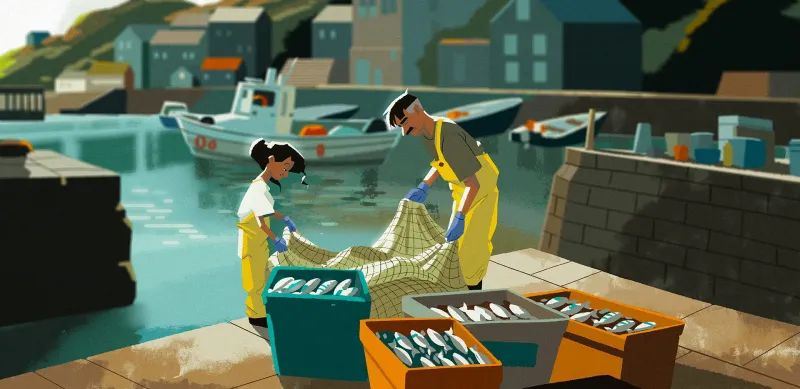
If you're working with a tighter budget but still want something that looks genuinely beautiful, one of the smartest moves you can make is to lean into illustration. Go heavy on the artwork, but keep the animation simple.
A richly detailed illustration with considered movement, a slow pan, a gentle parallax, a few key moments of animation, can be just as captivating as a fully animated sequence. Sometimes more so. There's a stillness to it that draws people in rather than overwhelming them.
This is something we feel strongly about at Myth. Illustration is at the heart of what we do. Our background artists and illustrators can create breathtaking, layered artwork that carries an entire story without needing every element to bounce, spin, or fly across the screen. The craft is in the image itself, and the animation becomes the finishing touch rather than the main event.
It's not about doing less. It's about being intentional with where the movement lands, so every animated moment earns its place.
If budget is a real concern, bring it up early. We'd always rather find a creative solution that plays to our strengths than watch a project get watered down trying to do too much with too little.
Why Understanding These Factors Actually Helps You
None of this is about justifying high prices. It's about understanding where your money's going so you can make smarter decisions.
If budget's tight, knowing these variables means you can have an honest conversation about what's possible. Maybe you simplify the style but keep the character work. Maybe you shorten the runtime but invest in original music. Maybe you extend the timeline to bring the cost down.
A good studio won't just send you a quote and hope you sign. They'll talk through the options, help you prioritise, and find a way to make it work without compromising the things that actually matter.
Three ways to bring costs down
Simplify the style
A cleaner visual approach can dramatically reduce production hours without sacrificing impact.
Shorten the runtime
A lean 60 seconds often lands harder than a bloated two minutes, and costs less too.
Extend the timeline
More time means studios can plan efficiently, use their core team, and avoid rush premiums.
We're always up for those conversations. If you're figuring out what's feasible for your next project, get in touch. We'll be straight with you about what's realistic, and we'll make sure whatever we land on is something you're genuinely proud to put out into the world.
Key Takeaways
- Style complexity is the single biggest cost driver. Flat vector graphics cost far less than frame-by-frame or illustrative animation.
- Character animation is expensive because it requires design, rigging, and skilled frame-by-frame work across multiple scenes.
- Sound design and music are half the film. Cutting audio corners undermines even the best visuals.
- Internal alignment and clear briefs before approaching a studio save significant time and money on revisions.
- Timeline flexibility, runtime decisions, and usage rights all offer meaningful levers for managing budget.