How to Create Faux Stop-Motion Animation with CGI and AI
Written by James Finlay
Founder of Myth Studio
As a studio founder (nee animator), I've always felt that stop-motion animation retains a certain level of magic above other styles. Even with today's advanced render engines, something about the tactility and charm of stop-motion seems irreplaceable, no matter how many GPUs you throw at it.
Perhaps there is also something in its lofty inaccessibility for a fledgling studio, bound merely to the latest Adobe Suite, forgoing puppets for pixels. Even with the extremely specialist skills and the patience required, having the space to build the sets is likely off limits for most small teams and creatives. But what is an animator if not a natural troubleshooter and a dreamer, and what is animation if not the ability to make real what does not exist yet?
And just as one might find more than one way to skin a cat, so too are there many ways to faux a stop-motion style. Faux stop-motion as a term can be used to describe any method to recreate the aesthetic and charm of stop-motion, without the full setup.
ITV Euro 2024: The First Foray
Myth Studio's ITV EURO 2024 animation was our first chevauchée into this realm. We were tasked with creating a storybook world: the Brothers Grimm universe wrapped in old writing paper and football memorabilia. We built it using a full CGI approach, and due to the way the creative developed, the aesthetic veered far more into 2D/3D CGI territory than stop-motion. But the aim of recreating that handmade charm did, I believe, shine through. We leaned into the technology available to us, mixed frame by frame animation with the moving 3D world, and created an immersive, fantastical storytelling effect. The superpan through an elves' workshop as they construct the international football boots is a particular favourite. The workshop interior is a sprawling 3D scene file, the elves individually animated and placed into the scene with spatial data.
Enjoy Your Lunch: Plasticine in Pixels
Ira Spiridonova's Enjoy Your Lunch, a mini-short created internally at Myth Studio, is another early experiment into faux stop-motion. As the project was ours, we had the ability to be more flexible with the approach, and we were able to commit to relatively realistic plasticine-style materials.
Inchstones: The Hybrid CGI and AI Workflow
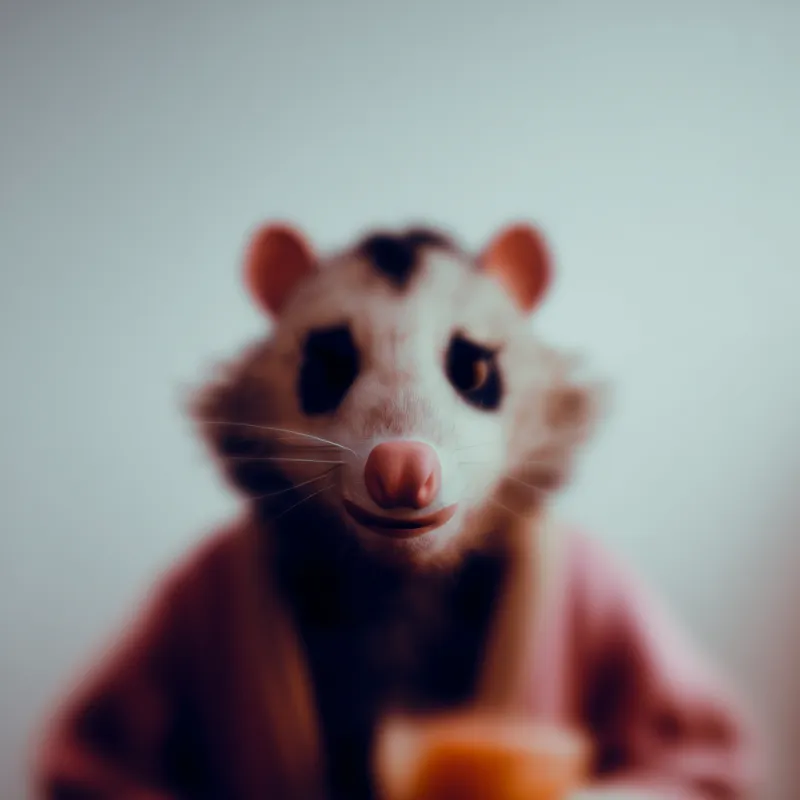
A significant step up for Myth Studio's faux stop-motion work came with the opportunity to use a hybrid CGI and AI animation workflow. The film, Inchstones, was created by Myth Studio in collaboration with KLICK Toronto for Nestle, and it detailed the small but complex steps that represent progress for families who tube feed. The client wanted a Fantastic Mr Fox style short film, told from the perspective of a possum mother making inchstones, rather than milestones, in her daughter's growth.
For this animation, we followed all the steps to create a traditional CGI faux stop-motion piece. We crafted the little rooms, brushed the possum family's hair into place, textured every prop and plant. All in Cinema 4D and Octane. We then took high-resolution renders and animated them with AI video models, which sped up the workflow considerably, likely cutting the project delivery time by around 70%.
The critical point is that AI was only used to make a traditionally created render move. That meant total control over the look and feel. No plasticky sheen, no uncanny veneer of artificiality.
The renders looked the way they did because a team of artists made them look that way, and AI simply gave those images motion.
The Magic of Many Hands
For the ITV Euros and Nestle animations we worked with a relatively large, multidisciplinary team of artists. This proved to be key. In my humblest of opinions, the magic of stop-motion comes not just from the aesthetic. At a gentle push, CGI and AI can achieve the desired photorealism. The magic comes from the individual contributions of a large, extremely talented team of artists and collaborators. Because the craft is created in the real world, there are so many opportunities for individual artists to work on specific elements. What other art form allows for an artist to focus just on painting roof tiles, while another places the modelled vegetation?
CGI reduces the number of people working on a scene, and computer work can be quite solitary by definition. Artists working together in real time in a real workshop is a tradition that dates back thousands of years. It is the original ark of creative collaboration, a wet clay maquette of ideas, spinning, morphing by the work of many hands, into a timeless piece of art.
And so, we decided to take the CGI render to AI pipeline a step further. What if we could build the character models in real life, as you would with a stop-motion production?
We put this idea into practice on a production called LEGS, a two minute poem about an arachnophobic, love-forlorn man who is struggling to find love on Tinder, who finally gets a match. But, to his horror, the love interest has a pet tarantula called Benjamin.
The early results are promising. Textures created in real life are unmatched, and the AI video is able to make them move with very little quality loss. Production time is cut down significantly, whilst still retaining much of the stop-motion charm.
The Answer
How then, should one faux a stop-motion? There is clearly not one single method, and as the technological landscape continues to develop, more routes through it will become available. The CGI or real model to AI pipeline holds a lot of promise, as it allows artists to work in a way that feels natural whilst taking advantage of the speed of AI. But the method only works if the process remains collaborative, with room for artists to specialise and bring their skills to bear.
On the complete opposite end sits the prompt box, where a single human types instructions into a void, skipping the necessary feedback loops between artist and art, leaving no room for collaboration at all. The difference matters. As long as artists have the ability to contribute to the larger whole, the charm and personality of the work has the best chance of shining through.
As long as artists have the ability to contribute to the larger whole, the charm and personality of the work has the best chance of shining through.
For more on how AI fits into creative production, see How to Use AI Without Losing the Craft.
Key Takeaways
- Faux stop-motion describes any method to recreate the aesthetic and charm of stop-motion without a full physical setup.
- A hybrid CGI to AI pipeline can cut production time by around 70% while preserving the handmade look and feel.
- The magic of stop-motion lies not just in the aesthetic, but in the collaborative contributions of a large, skilled team of artists.
- Building real-life character models and animating them with AI video offers promising results, with unmatched textures and minimal quality loss.
- The method only works if the process remains collaborative, with room for artists to specialise and bring their skills to bear.